
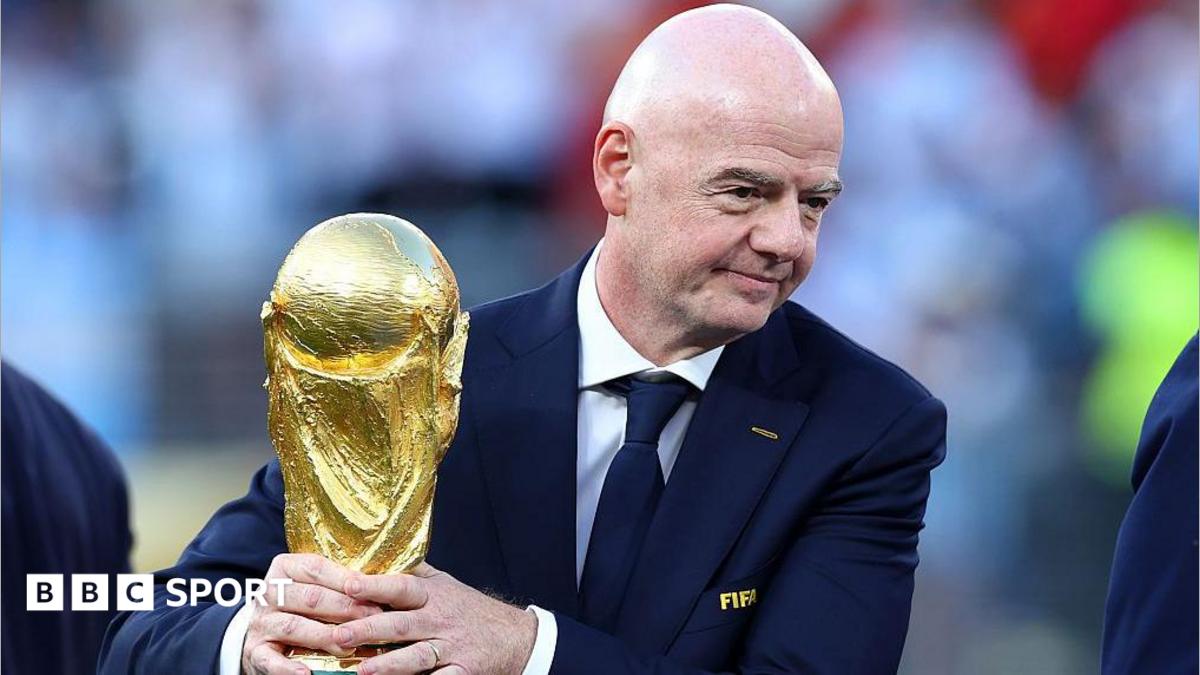
A bruising 24 hours – what next for Fifa and under-pressure Infantino?
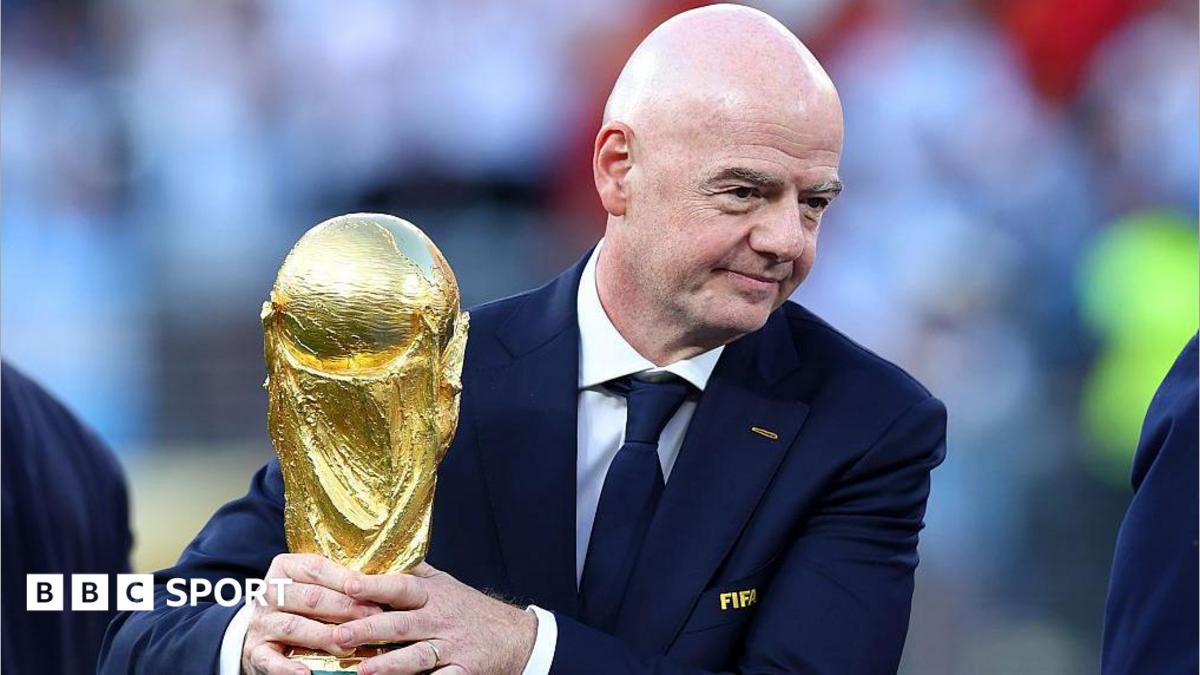
The Tactical Metamorphosis: How Positionless Football Is Redefining World Cup 2026
By Marco Del Vecchio | Senior Football Correspondent
Introduction (100 words): The beautiful game is bleeding into a new era. As the global footballing calendar hurtles toward the North American summer of 2026, a seismic shift is occurring beneath the surface of traditional tactics. No longer is the pitch divided into rigid quadrants of goalkeeper, defenders, midfielders, and strikers. Instead, we are witnessing the rise of “positionless football”—a fluid, chaotic, and intellectually demanding system where a full-back becomes a playmaker and a striker drops into the false nine role with alarming frequency. With 48 nations converging on the USA, Canada, and Mexico for World Cup 2026, this tactical evolution isn’t just a trend; it is the survival blueprint for the modern international manager. This article dissects the data, the minds, and the players driving this transformation.
The Death of the Static 4-3-3: Why Shape is Now a Suggestion
For decades, the 4-3-3 and the 4-4-2 were the sacred cows of international football. They provided defensive stability and predictable attacking patterns. However, the analytical revolution of the past five years has revealed a brutal truth: static formations are easily nullified. In the high-stakes environment of a World Cup, where opponents have weeks to study your every move, predictability is fatal. The modern game, particularly as we approach World Cup 2026, demands constant rotation. Manchester City’s system, heavily borrowed by national teams, is the prime exemplar. The “box midfield” isn’t a fixed lineup; it’s a transient state that occurs during build-up. When a full-back inverts, the winger hugs the touchline, and the defensive midfielder drops between the center-backs, the opposition’s markers are thrown into a state of confusion. This fluidity forces pressing triggers to be ignored, creating passing lanes that simply did not exist in 2010.
The “Inverted Full-Back” as a Metronome
The most visible symptom of this metamorphosis is the inverted full-back. Gone are the days of the lung-busting winger doubling up on the flank. Instead, we see players like João Cancelo (in his prime) or Bayern Munich’s Alphonso Davies (when deployed centrally) tucking into midfield. This is not a defensive maneuver; it is an overload tactic. By positioning a full-back centrally, the team creates a 4v3 overload in the middle of the park, allowing for quicker circulation of the ball and a higher line of possession. At World Cup 2026, expect to see South American teams, specifically Argentina, utilizing this to protect aging legs while maintaining a high tempo. The full-back’s role is no longer about crossing; it is about progression. They become the first line of attack, playing line-breaking passes that bypass an entire midfield press.
Center-Backs as Playmakers: The Libero Reborn
Simultaneously, the center-back position has undergone a cerebral upgrade. The modern centre-half is no longer judged solely on tackles and clearances. Progressive passes per 90 minutes are the new metric of choice. The “libero” of the 70s and 80s, epitomized by Franz Beckenbauer, has returned in a more aggressive, front-foot form. We see center-backs stepping out with the ball at their feet, engaging in 1v1 dribbles to break the first line of press. This is high-risk, high-reward football. If a center-back loses possession in this zone, it’s a direct run at your goalkeeper. However, the reward is the ability to bypass the midfield entirely. For teams like England and France, who possess physical monsters at the back (John Stones, Dayot Upamecano), this allows them to transition from defense to attack in two passes, bypassing the congested midfield zones that define modern knockout rounds.
Data-Driven Pressing: The New Physical Currency
While possession is often seen as the antithesis of pressing, the two are intrinsically linked in the new tactical paradigm. Positionless football thrives on immediate ball recovery. The GPS vest and the optical tracking data have changed how coaches train. The “pressing trap” is now a choreographed sequence of movements designed to funnel the opposition into a specific area of the pitch. For the 2026 World Cup, with the heat of summer in the USA and Mexico, managing physical output becomes the ultimate decider. Coaches are analyzing “sprints in possession” versus “sprints out of possession” to micro-manage energy. The new currency is not just distance covered, but “high-speed running above 25km/h.” National teams are now assigning specific players as “press triggers”—the player who initiates the chase, not to win the ball, but to force a backwards pass. This is chess with a pulsating heartbeat.
The Role of the “False Nine” and Positional Interchange in the Final Third
The evolution of the striker is the most romanticized, yet misunderstood, aspect of the tactical shift. The traditional number nine, the fox-in-the-box, is endangered. While physical strikers like Erling Haaland exist, international football—where space is at a premium and defenses are parked—requires a player who can drop deep and disrupt the back four’s markers. This “false nine” isn’t a striker at all; he is a central attacking midfielder wearing the number 9 shirt. By dropping into the “hole,” the false nine drags a center-back out of position, creating a vacuum behind him for a winger or attacking midfielder to run into. For the 2026 World Cup, this role will be crucial for teams like Brazil, who have a wealth of technical midfielders but lack a dominant penalty-box striker. The interchangeability of the front four—where a winger moves central, the false nine moves wide, and the full-back arrives on the edge of the box—creates an unmarkable web of passing triangles.
Managing Chaos: The Psychological Toll of Fluid Football
Off the pitch, the tactical shift has placed an enormous burden on the coaching staff and the players’ cognitive abilities. Positionless football isn’t just physically exhausting; it is cognitively draining. Players must make split-second decisions regarding positioning that used to be pre-programmed. This requires a high “football IQ” that is often lacking in the youth academies.
The “Rest Defense” and Mental Fatigue
A key concept in modern tactics is the “Rest Defense”—the number of players left behind to counter-attack when the team is in possession. In a fluid system, defining who is on rest defense is a constant negotiation. If your full-back has bombed forward and your central midfielder has dropped into the center-back role, who is the last man? This ambiguity leads to mental fatigue. Coaches are now hiring sports psychologists to train players to maintain “focus under chaos.” The 2026 World Cup, with the travel distances between Seattle and Mexico City, will test this mental resilience more than any tournament in history. The squads that can maintain cognitive sharpness in the 110th minute of a knockout match, when the body is screaming for rest, will lift the trophy.
Conclusion: The Beautiful Game, Rebuilt
The tactical metamorphosis is not a fad; it is the logical conclusion of a game that has been analyzed to its atomic level. The deconstruction of the formation sheet is a reflection of a faster, sharper, and more intelligent athlete. As we look toward the glitz of New York/New Jersey and the altitude of Guadalajara for the 2026 World Cup, the fans will bear witness to a completely different spectacle than what was seen in Brazil 2014 or Russia 2018. Positionless football is not without its flaws—it can be sterile and risk-averse in the final third if executed poorly. But at its best, it is a magnificent, fluid ballet of human movement and intelligence. The managers who embrace the chaos, who trust their players to improvise within a loose structure, will define the next decade. The era of the robot is over; we are entering the era of the artist. As the world gathers for the first 48-team World Cup, one thing is certain: the geometry of the pitch has changed, and there is no going back.
FAQ
1. How will the 2026 World Cup’s format change impact the tactics mentioned?
The 48-team format means more games are ‘winnable’ for minnows, but it also means a congested fixture list. For top nations, this makes the fluid, rotation-heavy systems essential to manage player load across Group Stage and the new Round of 32. Heavy pressing every match is impossible, so we will see more teams use the “positionless” style to conserve energy by keeping the ball in congested midfield areas, rather than chasing it.
2. Is the ‘false nine’ a necessity for every national team?
No. It depends on personnel. If you have a striker like Harry Kane or Osimhen who can link play AND score in the box, you use a more structured approach. However, the false nine is a tactical option that provides a numerical advantage in midfield. Teams lacking elite #9s, or with an abundance of creative attacking midfielders, use it to overwhelm the opposing pivot. It’s a weapon, not a requirement.
3. Why are inverted full-backs so popular if it leaves the flanks exposed?
It is a calculated risk. By inverting, the team secures the central passing lanes, which are statistically more dangerous than wide areas. The width is then provided by the wingers hugging the touchline or a wide center-back stepping up. The risk of a counter down the wing is mitigated by the “rest defense” typically having a fast center-back slides across to cover. The team sacrifices width in exchange for dominance in the middle third, where matches are won.